බිලට් ඇලුමිනියම් යනු කුමක්ද?
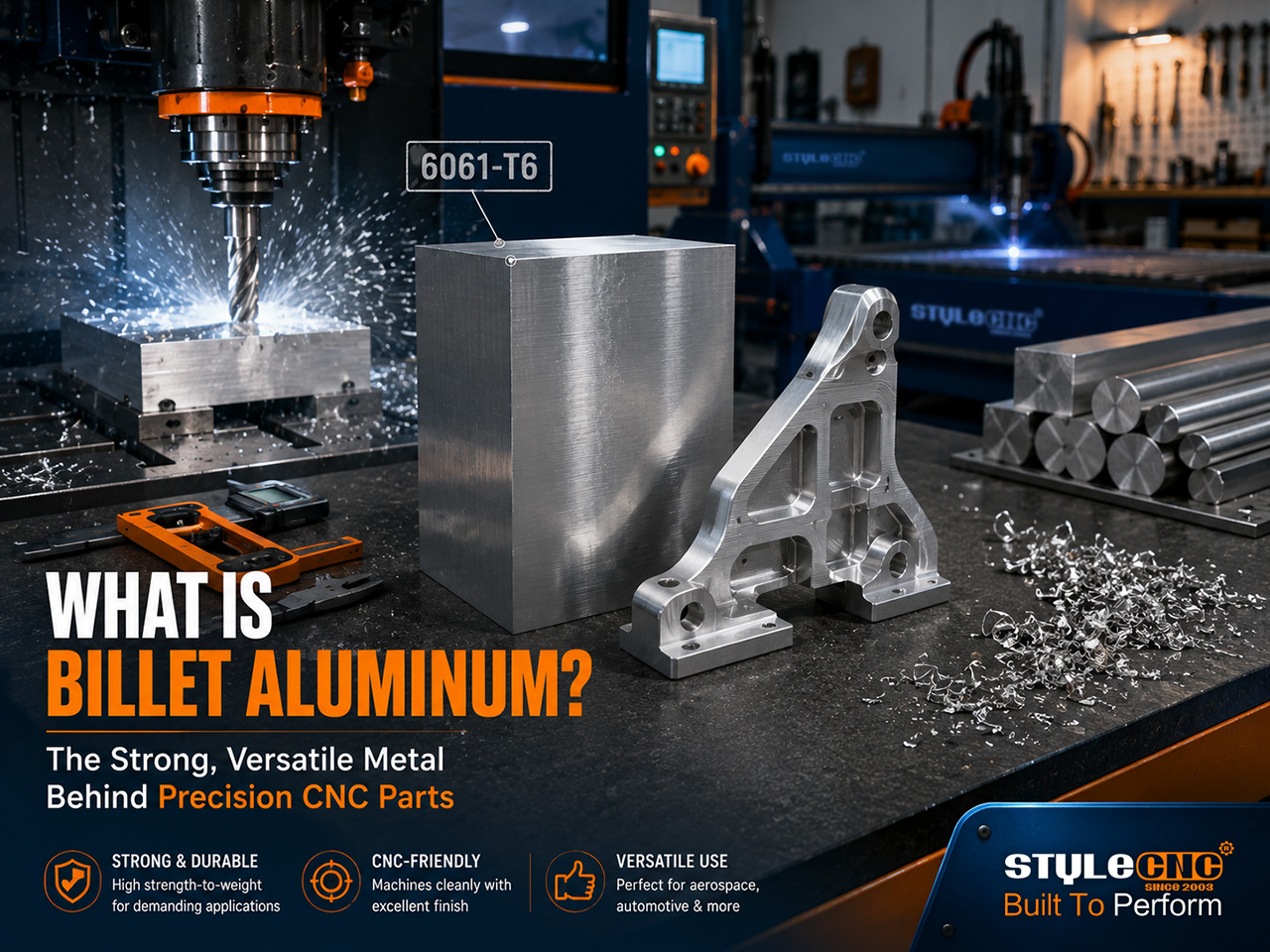
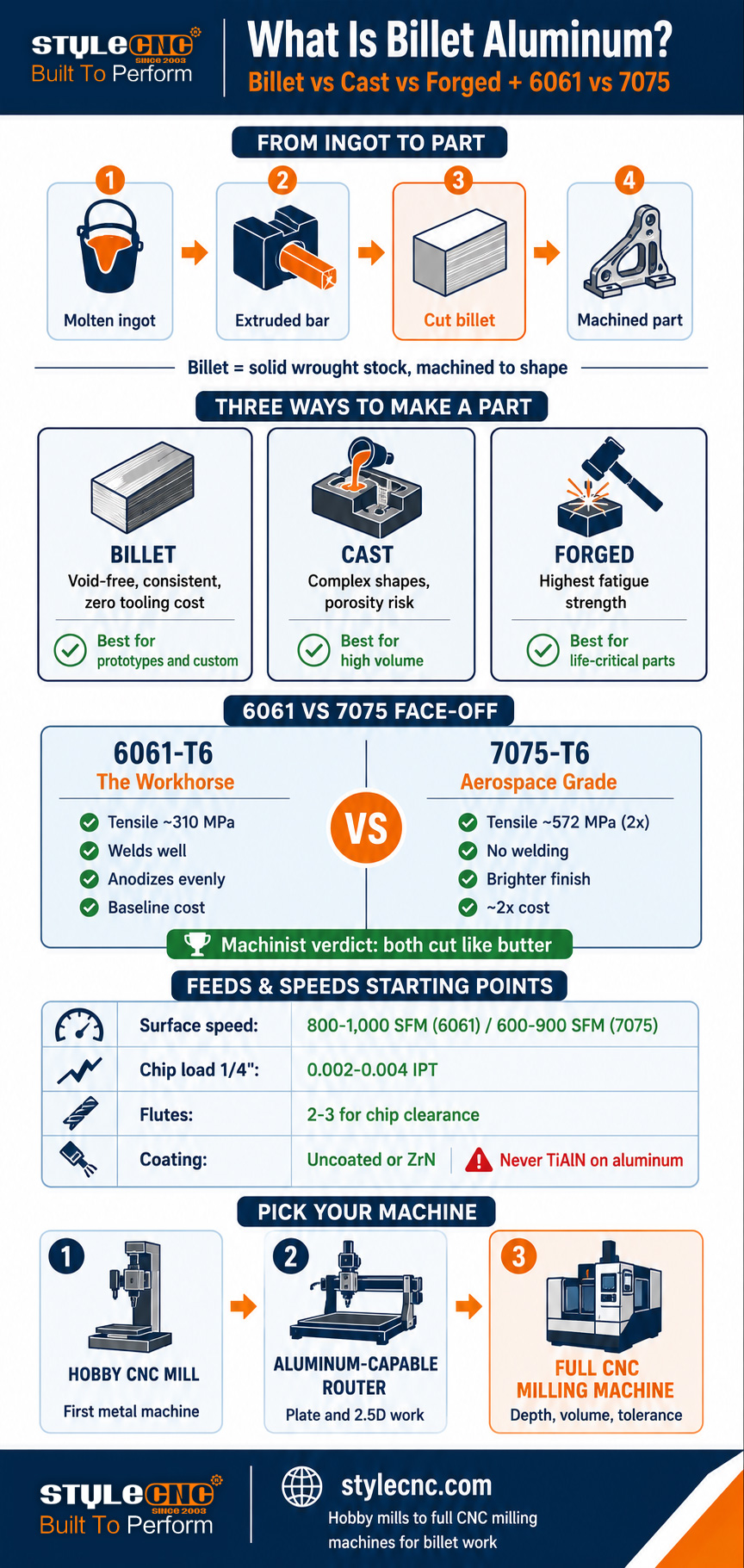
බිලට් ඇලුමිනියම් යනු වාත්තු කරන ලද ඉන්ගෝට් එකකින් නෙරා හෝ රෝල් කර දිගට කපා සාදන ලද ඇලුමිනියම් ඝන බ්ලොක් එකක් හෝ බාර් එකකි. බිලට් ලෙස විස්තර කර ඇති කොටස් අච්චුවකට (වාත්තු) වත් කිරීම හෝ හැඩයට (ව්යාජ) මිටියකින් පහර දීම වෙනුවට මෙම ඝන තොගයෙන් යන්ත්රගත කරනු ලැබේ. බිලට් ක්රියාවලිය ස්ථාවර ධාන්ය ව්යුහයක් සහ පුරෝකථනය කළ හැකි යන්ත්රෝපකරණ හැසිරීමක් ලබා දෙයි.
හරියටම කිවහොත්, බිල්ට් යනු අමු තොග ආකාරයක් විස්තර කරයි, මැජික් ද්රව්යයක් නොවේ. ඇලුමිනියම් ආරම්භ වන්නේ උණු කළ ලෝහ විශාල වාත්තු ඉන්ගෝට් වලට වත් කිරීමෙනි. එම ඉන්ගෝට් පසුව නිස්සාරණය කර හෝ බාර්, රවුම් සහ තහඩු වලට උණුසුම්ව රෝල් කරනු ලැබේ, මෙම ක්රියාවලිය ලෝහය සම්පීඩනය කරයි, එහි ධාන්ය ව්යුහය පිරිපහදු කරයි, සහ වාත්තු කිරීමෙන් ඉතිරි වන අභ්යන්තර හිස්තැන් බොහොමයක් ඉවත් කරයි. එම ව්යුත්පන්න තීරුව වැඩ කොටස ප්රමාණයේ කුට්ටි වලට කපන්න, එවිට ඔබට බිල්ට් ලැබෙනු ඇත.
නිෂ්පාදකයෙකු කොටසක් බිල්ට් එකක් යැයි පවසන විට, ඔවුන් අදහස් කරන්නේ එය එම ඝන ව්යුහගත තොගයෙන් යන්ත්රගත කර ඇති බවයි. කොටස නොවන සියලුම ද්රව්ය චිප්ස් ලෙස කපා දමනු ලැබේ. මෙය එහි පිරිසිදු ස්වරූපයෙන් අඩු කිරීමේ නිෂ්පාදනයක් වන අතර, බිල්ට් කොටස් ගුණාත්මක කීර්තියක් සහ පිරිවැය වාරිකයක් යන දෙකම දරන්නේ එබැවිනි: ක්රියාවලිය ද්රව්ය නාස්ති කරයි, නමුත් ඒකාකාර, ඝන, හිස්-නිදහස් අභ්යන්තර ව්යුහයක් සහිත කොටස් නිෂ්පාදනය කරයි.
බිලට් එක වටා ඇති ගුණාත්මක හැලෝ බොහෝ දුරට ලැබිය යුතු නමුත් බොහෝ විට අධික ලෙස අලෙවි වේ. නිසි ලෙස නිර්මාණය කරන ලද වාත්තු කොටසක් දුර්වල ලෙස නිර්මාණය කරන ලද බිලට් කොටසක් අභිබවා යා හැකිය. බිලට් විශ්වාසදායක ලෙස ලබා දෙන්නේ අනුකූලතාවයි: සිදුරු සහිත විස්මයන් නොමැත, සැඟවුණු හිස්තැන් නොමැත, නිස්සාරණය ඉඩ දෙන සෑම දිශාවකටම පුරෝකථනය කළ හැකි ශක්තිය සහ යන්ත්රෝපකරණ අතරතුර මාන ස්ථාවරත්වය.
බිල්ට් එදිරිව වාත්තු එදිරිව ව්යාජ ඇලුමිනියම්: සැබෑ වෙනස්කම්
නිෂ්පාදන මාර්ග 3ක් අමු ඇලුමිනියම් නිමි කොටස් බවට පත් කරන අතර, ඒ සෑම එකක්ම ලෝහයේ පැහැදිලි ඇඟිලි සලකුණක් තබයි. පහත වගුවේ කොටස් කාර්ය සාධනය සහ යන්ත්රෝපකරණ සඳහා වැදගත් වන සාධක හරහා ඒවා සංසන්දනය කරයි.
| සාධකය | බිලට් (යන්ත්රගත) | කාස්ට් | ව්යාජය |
|---|---|---|---|
| එය සාදා ඇති ආකාරය | ඝන සාදන ලද බාර් එකකින් හෝ තහඩුවකින් යන්ත්රගත කර ඇත | උණු කළ ලෝහ අච්චුවකට වත් කරනු ලැබේ | රත් කරන ලද හිස් මිටියකින් හෝ හැඩයට තද කර ඇත |
| අභ්යන්තර ව්යුහය | ඒකාකාර, ඝන, හිස්තැන් රහිත | සිදුරු සහ හැකිලීමේ හිස්තැන් ඇති විය හැක | ඝනත්වය වැඩිම; ධාන්ය ප්රවාහ කොටස් හැඩය අනුගමනය කරයි |
| ශක්තිය | ඉහළ සහ ස්ථාවර | තුනෙන් අඩුම; වාත්තු කිරීමේ ගුණාත්මකභාවය අනුව වෙනස් වේ. | ඉහළම, විශේෂයෙන් තෙහෙට්ටුවේ ශක්තිය |
| නිර්මාණ නිදහස | මෙවලම් ප්රවේශය මගින් සීමා කර ඇත | ඉහළම; සංකීර්ණ අභ්යන්තර හැඩතල හැකි ය | සීමිත; සරල ශක්තිමත් හැඩතල |
| මෙවලම් පිරිවැය | කිසිවක් නැත (සවිකිරීම පමණි) | පරිමාව ඉක්මවා ක්රමක්ෂය කරන ලද ඉහළ (අච්චු පිරිවැය) | විශාල පරිමාවන් සඳහා ඉහළම (මිය යන පිරිවැය) |
| හොඳම හඬ පරිමාව | 1 සිට සියය දක්වා | සිය ගණනක් සිට මිලියන ගණනක් දක්වා | දහස් ගණනින් මිලියන ගණනින් |
| සාමාන්ය කොටස් | මූලාකෘති, අභිරුචි වරහන්, කාර්ය සාධන කොටස් | එන්ජින් බ්ලොක්, නිවාස, රෝද (වාත්තු) | අත්හිටුවීමේ ආයුධ, ගුවන් යානා සවිකිරීම්, දොඹකර |
| මතුපිට නිම කිරීමේ ක්රියාවලිය | යන්ත්රගත නිමාව, Ra 1.6 හෝ ඊට වඩා හොඳයි | අවශ්ය තැන්වල යන්ත්රගත කර ඇත. | ව්යාජ සම්; අතුරුමුහුණත් වලදී යන්ත්රගත කර ඇත. |
ප්රායෝගික තීරණ රීතිය: අච්චු පිරිවැය ක්රමක්ෂය වන සහ සංකීර්ණ ජ්යාමිතිය වැදගත් වන ඉහළ පරිමාවකින් වාත්තු කිරීම ජය ගනී. තෙහෙට්ටුවේ ශක්තිය ජීවිතයට තීරණාත්මක වන විට ව්යාජකරණය ජය ගනී. මෙවලම් ආයෝජනයකින් තොරව මූලාකෘති, අඩු පරිමාවේ අභිරුචි වැඩ සහ විනෝදාංශකරුවෙකුට හෝ රැකියා සාප්පුවකට අද සම්පූර්ණ ශක්තිය අවශ්ය වන ඕනෑම කොටසක් සඳහා බිලට් ජය ගනී. ඒ අවසාන අවස්ථාව හරියටම CNC මෝල් සහ ඇලුමිනියම්-හැකියාව ඇති රවුටර ජීවත් වන ස්ථානයයි.
6061 vs 7075: වැදගත් වන ශ්රේණි 2
ඕනෑම ලෝහ සැපයුම්කරුවෙකු වෙත පිවිසෙන්න, බිල්ට් රාක්කවල ව්යාජ මිශ්ර ලෝහ 2 ක් ආධිපත්යය දරයි: 6061 සහ 7075. ඇලුමිනියම් සංගමයේ දත්ත වලට අනුව, 6000 සහ 7000 ශ්රේණි CNC යන්ත්රෝපකරණ භාවිතයට ප්රමුඛස්ථානය දෙන අතර, බොහෝ වෙළඳසැල් සඳහා තේරීම මෙම දෙකටම පටු වේ.
| දේපල | 6061-T6 (වැඩ අශ්වයා) | 7075-T6 (ගුවන් අභ්යවකාශ ශ්රේණිය) |
|---|---|---|
| ටෙන්සයිල් ස්ට්රෙන්ත් | ~310 MPa (45 ksi) | ~572 MPa (83 ksi), දළ වශයෙන් දෙගුණයක් |
| දෘඪතාව (Brinell) | ~ 95 | ~ 150 |
| ක්ෂය වීමට ප්රතිරෝධකතාව | විශිෂ්ටයි; ඒකාකාරව ඇනෝඩීකරණය වේ | සාධාරණ; සාමාන්යයෙන් ඇනෝඩීකරණය කර හෝ ආරක්ෂාව සඳහා ආලේප කර ඇත |
| වෑල්ඩින් කිරීමේ හැකියාව | සම්මත ක්රියාවලි සමඟ හොඳයි | දුර්වලයි; වෙල්ඩින් කිරීම නිර්දේශ නොකරයි. |
| යන්ත්රෝපකරණ | ඉතා හොඳයි; තරමක් ඇලෙන සුළු චිප්ස් | ඉතා හොඳයි; වඩා අමාරු, චිප්ස් කැඩෙන පිරිසිදු කරන්නා |
| මතුපිට නිමාව | හොඳයි; ස්ථාවර ඇනෝඩයිසින් වර්ණය | දීප්තිමත් යන්ත්රගත නිමාව; ඇනෝඩයිස් වර්ණය වෙනස් වේ |
| සාපේක්ෂ පිරිවැය | බේස්ලයින් | රාත්තලකට දළ වශයෙන් 2x (සැබෑ ලෝක උපුටා දැක්වීම්: ~$38 vs ~$101 සමාන තීරුවකට) |
| හොඳම දේ | වරහන්, සවිකිරීම්, කොටු, සාමාන්ය කොටස් | අධි පීඩන ව්යුහාත්මක කොටස්, අභ්යවකාශ, ධාවන තරඟ |
පිරිවිතර පත්රවලින් මඟ හැරෙන්නේ යන්ත්රය සම්බන්ධයෙන් 2 කොතරම් සමානද යන්නයි. සමාන වැඩසටහන් සහ මෙවලම් භාවිතයෙන් දෛනික වාර්තාව දෙකම කපා දැමූ ප්රායෝගික යන්ත්රෝපකරණ සාමාජිකයින්, 7075 සැලකිය යුතු ලෙස දීප්තිමත් නිමාවක් ඉතිරි කරන අතර කාබයිඩ් දාර තරමක් වේගයෙන් පැළඳ සිටියදී චිප්ස් වඩාත් පහසුවෙන් කැඩී යයි. එක් සාමාජිකයෙක් ප්රජා එකඟතාවය සාරාංශ කළේය: එක්කෝ එකක් බටර් මෙන් කපා දමයි. විනෝදාංශ-යන්ත්රෝපකරණ සංසද පරිශීලකයින් එය ප්රතිරාවය කරයි: 6061 හා සමාන සංග්රහ සහ වේගයන්, 7075 ට බිය නොවන්න.
සැබෑ තීරණ සාධක වන්නේ යන්ත්රෝපකරණ හැකියාව නොව පිරිවැය සහ යෙදුමයි. කොටසට සැබවින්ම ශක්තිය අවශ්ය වූ විට 7075 සඳහා දෙගුණයක් ගෙවන්න: බර දරණ වරහන්, අත්හිටුවීමේ සංරචක, අධි පීඩන සවිකිරීම්. අනෙක් සියල්ල සඳහා 6061 භාවිතා කරන්න, සහ ප්රසාද දීමනාවක් ලෙස වඩා හොඳ ඇනෝඩයිසින් අනුකූලතාව සහ වෑල්ඩින් කිරීමේ හැකියාව ලබා ගන්න.
T6 යන්නෙන් අදහස් කරන්නේ කුමක්ද? සරල භාෂාවෙන් උෂ්ණත්වය
මිශ්ර ලෝහ අංකයට පසුව ඇති අකුරු මගින් අවසාන ශක්තිය සකසන තාප පිරියම් කිරීමේ තත්වය වන උෂ්ණත්වය විස්තර කෙරේ. බිල්ට් ගැනුම්කරුවන් සඳහා, රාක්කයේ ඇති සෑම දෙයක්ම පාහේ තනතුරු 3 කින් ආවරණය වේ.
✓ T6: ද්රාවණය තාප පිරියම් කර කෘතිමව වයස්ගත කරන ලදී. 6061 සහ 7075 යන දෙකටම සම්මත පූර්ණ-ශක්ති උෂ්ණත්වය. ලැයිස්තුගත කිරීමක උෂ්ණත්වයක් නොමැතිව 6061 හෝ 7075 පමණක් සඳහන් වන්නේ නම්, T6 උපකල්පනය කරන්න, නමුත් ව්යුහාත්මක වැඩ සඳහා මිලදී ගැනීමට පෙර තහවුරු කරන්න.
✓ T651: T6 සහ අභ්යන්තර ආතතිය සමනය කරන පාලිත දිගුවක්. තහඩු තොගය සඳහා කරුණු: විකෘති වීමට හේතු වන අවශේෂ ආතතීන් ඉවත් කර ඇති බැවින්, යන්ත්රෝපකරණ අතරතුර T651 තහඩුව පැතලිව පවතී. විශාල සාක්කු සහිත ප්රදේශ සහිත කොටස් සඳහා කුඩා වාරිකය වටී.
✓ O (ඇනීල් කරන ලද): මෘදු, ඇනීල් කරන ලද තත්ත්වය. නැමීමට පහසුය, යන්ත්රයට භයානකයි (අතිශයින්ම ඇලෙන සුළුයි), සහ දුර්වලයි. ඔබ 1 වන ආකෘතිය සකස් කර පසුව තාප පිරියම් කිරීමට අදහස් කරන්නේ නම් මිස යන්ත්රගත කොටස් සඳහා වළකින්න.
ඝන තහඩු යන්ත්රෝපකරණ සඳහා ඕනෑම කෙනෙකුට ආතතිය අඩු කිරීමේ ලක්ෂ්යය අවධාරණය කළ යුතුය. ආතතිය අඩු නොවන කොටස්වල ගැඹුරු සාක්කු කැපීම අගුළු දැමූ ආතතීන් මුදා හරින අතර, ද්රව්ය ගැලවී යන විට කොටස දෘශ්යමාන ලෙස නැමිය හැකිය. එය වැළැක්වීම සඳහා T651 තහඩුව විශේෂයෙන් පවතී. තුනී කොටස් සහ කුඩා වරහන් සඳහා, සම්මත T6 තීරුව හොඳයි.
බිල්ට් ඇලුමිනියම් යන්ත්රෝපකරණ: ආහාර සහ වේග මූලික කරුණු
ඇලුමිනියම් යන්ත්රෝපකරණ සඳහා වඩාත්ම සමාව දෙන ලෝහය වන අතර, ලී සහ ප්ලාස්ටික් වලින් ඉදිරියට යන විනෝදාංශකරුවන් සඳහා එය නිවැරදි පළමු ලෝහය වන්නේ එබැවිනි. පහත සංඛ්යා වත්මන් කර්මාන්ත කැපුම් ප්රස්ථාර සහ යන්ත්රෝපකරණ සංසද භාවිතයන්ගෙන් ලබාගත් එකඟතා ආරම්භක ලක්ෂ්ය වේ. ඒවා පළමු-පාස් පරාසයන් ලෙස සලකන්න, ඉන්පසු කප්පාදුවට සවන් දීමෙන් සුසර කරන්න.
| පරාමිතිය | 6061-T6 ආරම්භක ස්ථානය | 7075-T6 ආරම්භක ස්ථානය |
|---|---|---|
| මතුපිට වේගය (කාබයිඩ්) | 800 සිට 1,000 දක්වා SFM රළු කිරීම | 600 සිට 900 දක්වා SFM (10 සිට 20% පහළ) |
| චිප් භාරය, 1/4 අඟල් අන්ත මෝල | IPT 0.002 සිට 0.004 දක්වා | 0.002 සිට 0.004 දක්වා IPT (සමාන) |
| චිප් භාරය, 1/2 අඟල් අන්ත මෝල | IPT 0.003 සිට 0.006 දක්වා | 0.003 සිට 0.006 දක්වා IPT (සමාන) |
| නළා ගණන | චිප් නිෂ්කාශනය සඳහා නළා 2ක් හෝ 3ක් | නළා 2ක් හෝ 3ක්; චිප්ස් පහසුවෙන් කැඩී යයි |
| මෙවලම් ආලේපනය | ආලේප නොකළ හෝ ZrN (කිසි විටෙකත් TiAlN නොවේ) | ආලේප නොකළ හෝ ZrN (කිසි විටෙකත් TiAlN නොවේ) |
| සිසිලනකාරකය / ලිහිසිකරණය | මීදුම හෝ ගංවතුර; ගොඩගැසී ඇති දාර වළක්වයි. | එකමයි; තාප කළමනාකරණය ටිකක් වැදගත් |
ඕනෑම ප්රස්ථාරයකට වඩා w8 නීති 3ක් දරයි. පළමුව, චිප් බර ඉතා වැදගත් වේ: චිපයක් ඕනෑවට වඩා සැහැල්ලු වන අතර මෙවලම කැපීම වෙනුවට අතුල්ලමින්, තාපය ගොඩනඟා ඇලුමිනියම් කැපුම් දාරයට වෑල්ඩින් කරයි (ගොඩනඟන ලද දාරය, අංක එකේ ඇලුමිනියම් නිමාව ඝාතකයා). දෙවනුව, කැපුමෙන් චිප්ස් ඉවත් කරන්න: චිප්ස් නැවත කැපීම නිමාව විනාශ කර මෙවලම් බිඳ දමයි, ඒ නිසා විශාල ගුලට් සහිත 2 සහ 3 නළා අන්ත මෝල් ඇලුමිනියම් වැඩ ආධිපත්යය දරයි. තෙවනුව, ඇලුමිනියම් මත TiAlN-ආලේපිත මෙවලම් කිසි විටෙකත් භාවිතා නොකරන්න: ආලේපනයේ ඇලුමිනියම් සහ රසායනිකව වැඩ කොටසට ගැල් අඩංගු වේ.
විනෝදාංශ යන්ත්ර සඳහා ක්රියාකාරී උදාහරණයක්
ප්රායෝගික යන්ත්රය: 4,200 RPM ස්පින්ඩලයක් සහිත විනෝදාංශ මෝලක් හෝ ඇලුමිනියම්-හැකියාව ඇති රවුටරයක් සහ a 1/2 6061 දී අඟල් 3-නලා කාබයිඩ් අන්ත මෝල. මෙම සැකසුම හරියටම ක්රියාත්මක කරන විනෝදාංශ-යන්ත්ර විද්යා සාමාජිකයෙකු දතකට අඟල් 0.005 ක චිප් බරකින් 30 සිට 40 දක්වා IPM වාර්තා කරයි, 3 HP ලබා ගත හැකිය. සාමාන්ය යන්ත්රවල ඇලුමිනියම් යන්ත්රෝපකරණවල ලක්ෂණය එයයි: මධ්යස්ථ RPM, අවංක චිප් බර සහ විශාල සාප්පු මතුපිට වේගයන් පසුපස හඹා යන දැඩි වැඩ රඳවා ගැනීමේ පහර.
ඉහළ RPM රවුටර ගණිතය උඩු යටිකුරු කරයි. 10,000 සිට 24,000 දක්වා RPM රවුටර ස්පින්ඩලයක් විශාල කටර් සඳහා ප්රමාණවත් තරම් වේගය අඩු කළ නොහැක, එබැවින් ඇලුමිනියම් රවුටර ක්රියාකාරිත්වය කුඩා තනි-නලා සහ 2-නලා අන්ත මෝල් වලට අනුග්රහය දක්වයි (1/8 දක්වා 1/4 අඟල්) චිප් බර පවත්වා ගැනීම සඳහා ආක්රමණශීලී සංග්රහයක් සමඟ වේගයෙන් ධාවනය කරන්න. මේ සඳහා තනි නළා ඇලුමිනියම් බිටු හරියටම පවතී: බහු නළා මෙවලම් අවහිර වන රවුටර වේගයෙන් චිප් ඉවත් කරන එක් විශාල ගුලට් එකක්.
බිලට් ඇලුමිනියම් සඳහා ඔබට අවශ්ය යන්ත්රය කුමක්ද?
ආරම්භකයින් උපකල්පනය කරනවාට වඩා බොහෝ යන්ත්රවලට බිලට් ඇලුමිනියම් ළඟා විය හැකිය. අවශ්යතාවය වන්නේ අමු බලය නොව දෘඩතාව සහ චිප කළමනාකරණයයි. විනෝදාංශිකයාගේ සිට සාප්පු සවාරි දක්වා වර්ණාවලිය ආවරණය කරන යන්ත්ර පන්ති 3 කි.
ඩෙස්ක්ටොප් සහ විනෝදාංශ CNC මෝල්. ලෝහ සඳහා නිර්මාණය කර ඇති, දෘඩ යකඩ රාමු සහ විශාල කටර් වලට ගැලපෙන අඩු RPM ඉහළ ව්යවර්ථ ස්පින්ඩල් සමඟ. ලෝහ සඳහා විනෝදාංශ CNC ඇඹරුම් යන්ත්රය සහ ඩෙස්ක්ටොප් කුඩා CNC ඇඹරුම් යන්ත්රය පන්තිය 6061 සහ 7075 යන දෙකෙහිම වරහන්, කොටු සහ කුඩා බිල්ට් කොටස් හසුරුවයි. මෙය ස්වාභාවික 1 වන ලෝහ යන්ත්රයයි.
ඇලුමිනියම්-හැකියාව ඇති CNC රවුටර. දෘඩ රාමු, නිසි ස්පින්ඩල් සහ මීදුම ලිහිසිකරණය සහිත ගැන්ට්රි රවුටර කුඩා-කටර් ඉහළ-RPM ප්රවේශය භාවිතා කරමින් බිලට් ඇලුමිනියම් හොඳින් කපා දමයි. ඇලුමිනියම් විසඳුම් මාර්ගෝපදේශය සඳහා CNC රවුටරය සැකසුම් අවශ්යතා ආවරණය කරයි, සහ තැටි ATC පද්ධතිය සහිත ඇලුමිනියම් CNC රවුටරය මෙවලම් වෙනස් වන සහ විශාල ලියුම් කවර වැදගත් වන නිෂ්පාදන අවසානය නියෝජනය කරයි. තහඩු වැඩ සඳහා රවුටර දිලිසෙනවා: පැතලි බිල්ට් කොටස්, පැනල් සහ 2.5D වරහන්.
සම්පූර්ණ CNC ඇඹරුම් යන්ත්ර. ගැඹුරු කප්පාදු, දැඩි තෙම්පරාදු, නිෂ්පාදන පරිමාවන් සහ බහු සැකසුම් අවශ්ය කොටස් සඳහා, CNC ඇඹරුම් යන්ත්ර නාමාවලිය අච්චු ශ්රේණියේ වේදිකා හරහා ස්වයංක්රීය ලෝහ ඇඹරුම් යන්ත්ර විහිදේ. පියවර ඉහළ යාම දෘඪතාව මිලදී ගන්නා අතර, එය කෙලින්ම වේගවත් ද්රව්ය ඉවත් කිරීම සහ බිල්ට් වැඩ වලදී වඩා හොඳ ඉවසීමක් බවට පරිවර්තනය වේ. පුළුල් ලෝහ CNC යන්ත්ර නාමාවලිය ඇලුමිනියම් වානේ, පිත්තල සහ තඹ සමඟ මිශ්ර කරන වෙළඳසැල් සඳහා යාබද විකල්ප ආවරණය කරයි.
පාරිභාෂික ශබ්ද මාලාව: බිලට් ඇලුමිනියම් නියමයන්
කොටස් මිලදී ගැනීමේදී, සංසද නූල් කියවන විට හෝ ද්රව්ය ලැයිස්තු සංසන්දනය කිරීමේදී මෙම යොමුව භාවිතා කරන්න.
| කාලීන | අර්ථ දැක්වීම |
|---|---|
| බිලට් | නෙරා ඇති හෝ රෝල් කරන ලද තොගයකින් කපා, යන්ත්රෝපකරණ සඳහා සූදානම් කර ඇති, ඝන බ්ලොක් එකක් හෝ ව්යාජ ඇලුමිනියම් තීරුවක්. |
| සාදන ලදී | වාත්තු කිරීමෙන් පසු යාන්ත්රිකව වැඩ කරන ලද (නිස්සාරණය කරන ලද, රෝල් කරන ලද) ඇලුමිනියම්, එහි ධාන්ය ව්යුහය පිරිපහදු කරයි. |
| ඉන්ගෝට් | නිෂ්පාදන සාදන ලද විශාල ඇලුමිනියම් වාත්තු කුට්ටිය ආරම්භ වේ. |
| උෂ්ණත්වය | මිශ්ර ලෝහයේ අවසාන ශක්තිය සහ දෘඪතාව සකසන තාප පිරියම් කිරීමේ තත්ව නාමය (T6, T651, O). |
| T651 | ආතතිය සමනය කිරීම සඳහා T6 උෂ්ණත්වය සහ පාලිත දිගු කිරීම; යන්ත්රෝපකරණ අතරතුර ඝන තහඩුව සමතලා කර තබයි. |
| ගොඩනඟන ලද දාරය (BUE) | තාපය හා අතුල්ලමින් ඇලුමිනියම් කැපුම් දාරයට වෑල්ඩින් කිරීම; දුර්වල නිමාවන්ට ප්රධාන හේතුව. |
| චිප් භාරය (IPT) | එක් එක් කැපුම් දත මඟින් එක් එක් භ්රමණය සඳහා ඉවත් කරන ද්රව්ය අඟල් ගණන; හර පෝෂණ සහ වේගය විචල්ය වේ. |
| එස්එෆ්එම් | මිනිත්තුවකට මතුපිට අඩි; ද්රව්යය හරහා කැපුම් දාරයේ වේගය. |
| විදුරුමස් ගතිය | මෘදු ඇලුමිනියම් (විශේෂයෙන් 6061 සහ ඇනීල් කරන ලද තොගය) පිරිසිදුව කැපීමට වඩා ආලේප කිරීමට ඇති ප්රවණතාවය. |
| පෝරෝසිටි | වාත්තු ඇලුමිනියම් වල සිරවී ඇති වායුවෙන් අභ්යන්තර හිස්තැන්; නිසි ලෙස සකස් කරන ලද බිල්ට් තොගයේ නොමැත. |
නිතර අසන ප්රශ්න
බිලට් ඇලුමිනියම් වාත්තු ඇලුමිනියම් වලට වඩා ශක්තිමත්ද?
සාමාන්යයෙන් ඔව්, එකම මිශ්ර ලෝහ පවුල සඳහා. බිල්ට් තොගය නිපදවන ව්යුත්පන්න ක්රියාවලිය, වාත්තු කිරීමෙන් ඉතිරි කළ හැකි සිදුරු සහ හිස්තැන් සම්පීඩනය කරයි, බිල්ට් කොටස් වලට වඩාත් ස්ථාවර ශක්තියක් ලබා දෙයි. ව්යාජ ඇලුමිනියම් තෙහෙට්ටුවේ ශක්තිය මත දෙකම පරාජය කරයි, මන්ද ව්යාජ ලෙස කොටස් හැඩය සමඟ ධාන්ය ප්රවාහය පෙළගස්වයි. අවංක අවවාදය: හොඳින් ඉංජිනේරු කරන ලද වාත්තු කොටසක් නරක ලෙස නිර්මාණය කරන ලද බිල්ට් කොටසක් අභිබවා යා හැක, එබැවින් බිල්ට් යනු ස්වයංක්රීය ශක්තිය ජයග්රහණයක් නොව අනුකූලතා සහතිකයකි.
7075 ට වඩා 6061 යන්ත්රයට අමාරුද?
දිනපතා දෙකම කපන යන්ත්රෝපකරණ ශිල්පීන්ට අනුව, යන්තම්. ප්රායෝගික යන්ත්රෝපකරණ සංසද සාමාජිකයින් වාර්තා කරන්නේ මිශ්ර ලෝහ දෙකෙහිම සමාන වැඩසටහන් සහ මෙවලම් ක්රියාත්මක කරන බවයි, වෙනස්කම් වන්නේ 7075 කාබයිඩ් දාර තරමක් වේගයෙන් පැළඳීම, චිප්ස් වඩාත් පහසුවෙන් කැඩීම සහ දීප්තිමත් මතුපිට නිමාවක් ඉතිරි කිරීමයි. වත්මන් කර්මාන්ත කැපුම් ප්රස්ථාරවල 7075 මතුපිට වේගය සමාන චිප් බරක් සහිතව 6061 ට වඩා සියයට 10 සිට 20 දක්වා (කාබයිඩ් සමඟ 800 සිට 1,000 SFM දක්වා රළු කිරීම) දක්වා ඇත. මිශ්ර ලෝහ දෙකම විනෝදාංශකරුවෙකු බිය ගැන්විය යුතු නැත.
7075 6061 ට වඩා මෙතරම් මිල අධික වන්නේ ඇයි?
සින්ක් මත පදනම් වූ මිශ්ර ලෝහකරණය, දැඩි නිෂ්පාදන පාලනය සහ අභ්යවකාශ ඉල්ලුම. ප්රායෝගික යන්ත්රෝපකරණ මිලදී ගැනීමේ නූල් වලින් සැබෑ ලෝක මිලකරණය පරතරය පැහැදිලිව පෙන්නුම් කරයි: 6061-T6 සඳහා ඇමරිකානු ඩොලර් 38 ක් සහ 7075-T6 සඳහා ඇමරිකානු ඩොලර් 101 ක් ලෙස උපුටා දක්වා ඇති සංසන්දනාත්මක තීරු, සාමාන්යයෙන් සඳහන් කරන ලද 2x-ප්ලස් වාරිකයට ආසන්නයි. අමතර පිරිවැය ආතන්ය ශක්තිය (572 MPa සහ 310 MPa පමණ) දෙගුණයක් පමණ මිලදී ගනී, එය සැබෑ බර උසුලන යෙදුම්වල පමණක් ගෙවනු ලැබේ.
CNC රවුටරයකට ඇත්තටම බිල්ට් ඇලුමිනියම් කපා ගත හැකිද?
ඔව්, නිවැරදි ප්රවේශය සමඟ. නිසි ස්පින්ඩල් සහිත දෘඩ-රාමු රවුටර කුඩා තනි-නලාවක් හෝ 2-නලාවක් කාබයිඩ් අන්ත මෝල් භාවිතා කරමින් නිතිපතා බිල්ට් ඇලුමිනියම් තහඩුව කපා දමයි (1/8 දක්වා 1/4 අඟල්) චිප් බර පවත්වා ගැනීම සඳහා ආක්රමණශීලී පෝෂණයක් සහිතව ඉහළ RPM හි ධාවනය වන අතර, ගොඩනඟන ලද දාරය වැළැක්වීම සඳහා මීදුම ලිහිසි කිරීම. රවුටර වලට හොඳින් කළ නොහැකි දෙය නම් විශාල කටර් සහිත ගැඹුරු බර රළු කිරීම වන අතර එය දෘඩ CNC මෝල් භාර ගනී. පැතලි වරහන්, පැනල් සහ 2.5D බිලට් කොටස් ස්ථිර රවුටර භූමියකි.
6061-T6 හි T6 යන්නෙන් අදහස් කරන්නේ කුමක්ද?
T6 යනු උෂ්ණත්වය යන තනතුරයි: ද්රාවණය තාප පිරියම් කර කෘතිමව වයස්ගත කර ඇත, සම්පූර්ණ ශක්තියට. එය 6061 සහ 7075 බිල්ට් තොගය යන දෙකටම සම්මත කොන්දේසියයි. T651 අභ්යන්තර ආතතිය සමනය කරන පාලිත දිගුවක් එක් කරයි, එමඟින් ඔබ ගැඹුරු සාක්කු එයට යන්ත්රගත කරන විට ඝන තහඩුව සමතලා කරයි. ඇනීල්ඩ් (O temper) තොගය මෘදුයි, යන්ත්රයට ඇලෙන සුළුයි, සහ දුර්වලයි, එබැවින් යන්ත්රගත කොටස් සඳහා එය වළක්වා ගන්න.
බිල්ට් ඇලුමිනියම් වලින් ආරම්භකයකු ආරම්භ කළ යුතු ආහාර සහ වේගයන් මොනවාද?
6061-T6 හි කාබයිඩ් මෙවලම් සමඟ: දළ වශයෙන් 800 සිට 1,000 SFM මතුපිට වේගය, දතකට අඟල් 0.002 සිට 0.004 දක්වා චිප් බරක් a මත 1/4 අඟල් අන්ත මෝල, නළා 2ක් හෝ 3ක්, ආලේප නොකළ හෝ ZrN ආලේපනය, සහ මීදුම හෝ ගංවතුර සිසිලනකාරකය. විනෝදාංශ යන්ත්රයක 4,200 RPM පමණ සීමා කර ඇත. 1/2 අඟල් 3-නලා කපනය, සංසද-ලේඛනගත පුහුණුව 0.005 ක පමණ චිප් භාරයකින් 30 සිට 40 IPM දක්වා ධාවනය වේ. ගතානුගතිකව ආරම්භ කරන්න, කප්පාදුවට සවන් දෙන්න, සහ වේගය වැඩි කිරීමට පෙර පෝෂණය වැඩි කරන්න.
The Bottom Line
බිලට් ඇලුමිනියම් යනු හුදෙක් කොටස් වලට යන්ත්රගත කරන ලද ව්යුහයක් වන අතර, එය ගෙන යන කීර්තිය එම ව්යුහයේ අනුකූලතාවයෙන් පැමිණේ: වාත්තු සිදුරු නොමැතිකම, පුරෝකථනය කළ හැකි ශක්තිය සහ පිරිසිදු යන්ත්රෝපකරණ හැසිරීම. බොහෝ වැඩ සඳහා, 6061-T6 නිවැරදි පිළිතුර වන අතර, 7075-T6 දෙගුණයක මිලකට සැබවින්ම දෙගුණයක ශක්තියක් අවශ්ය කොටස් සඳහා වෙන් කර ඇත. මිශ්ර ලෝහ දෙකම පහසුවෙන් යන්ත්රගත කිරීමට ප්රමාණවත් වන අතර ඒවා ලී සහ ප්ලාස්ටික් පසුකර යන ඕනෑම විනෝදාංශයක් සඳහා නිවැරදි පළමු ලෝහ වේ.
යන්ත්රය ලෝහයට වඩා වැදගත්. දෘඩ විනෝදාංශ CNC ඇඹරුම් යන්ත්රය හෝ නිසි ලෙස වින්යාස කර ඇත ඇලුමිනියම්-හැකියාව ඇති CNC රවුටරය ඕනෑම වැඩමුළුවකට බිල්ට් වැඩ විවෘත කරයි, සහ CNC ඇඹරුම් යන්ත්රවල සම්පූර්ණ නාමාවලිය කොටසේ ප්රමාණය, ගැඹුර හෝ පරිමාව ප්රවේශ පන්තිය ඉක්මවා යන විට පියවර ඉහළට ආවරණය කරයි. අමතන්න STYLECNC ඔබට සෑදීමට අවශ්ය බිල්ට් කොටස් වලට යන්ත්රයක් ගැලපීමට කණ්ඩායම.